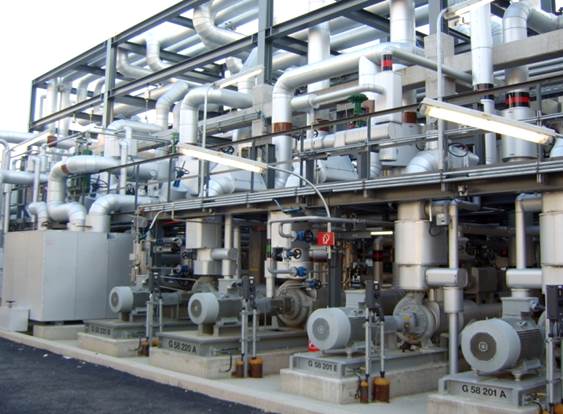
Detail Engineering Piping Systems

Detailed engineering for piping systems

Detailed engineering are studies which creates a full defined scope of work for every aspect of project development. It is a multi-step process which includes conceptualization, research, feasibility analogy, establishing design requirements, preliminary design plans, detailed designing, production planning and tool design and finally moving towards actual production. Detail engineering studies are a key component for every project development across Mining, Infrastructure, energy, oil&gas sectors.

Detailed engineering companies have the best technical experts & a wide range of experience across various industries to carry out the tasks of project management at the maximum precision level.
Piping engineering is a specialised branch of detailed engineering dealing with design & layouts of piping network along with the Equipments in a process plant.

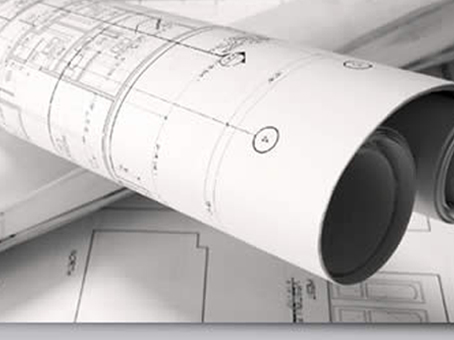
The images shown form a fully fledged blue print of a plant & are used for plant construction at site. The most important factors to be considered are:

  • Process requirements
  • Process safety
  • Operability
  • Maintenance
  • Compliance with statutory requirements & economy

2

Piping detailed engineering process:

‘Piping’ includes the utility of components such as pipe, valves and fittings. A piping designer or a piping engineering company should be thoroughly acquainted with the equipment, instrumentation and related disciplines. A team of piping detailed engineering consists of Engineers, designers and construction personnel who get together to develop and design piping and instrumentation diagrams also known as P&ID (Process & Instrumentation Diagrams).

However, the process doesn’t stop there, they also make equipment plot plans, define the piping arrangements and make fabrication drawings.
A piping engineering company performs the following processes:

  1. Preparation of plot plan, equipment layouts piping studies, piping specification
  2. Review of process package
  3. Giving inputs to civil, vessel, electrical / instrumentation groups for various purposes

A piping engineering company ideally goes through the following plan of action to initiate the project:

  • Preparation of piping layouts, isometrics, support Drawings
  • Stress analysis
  • Procurement assistance
  • Preparation of drawings for statutory approvals
  • Preview of vendor drawings
  • Coordination with various engineering groups & site

And finally ends with completion & commissioning of plant.

Detail piping engineering: What does it involve?

Detail piping engineering consists of an engineering report for the use of various types of pipes and pumps with pressure drop calculations. It also consists of:

  • Pipes and pumps specifications
  • equipment selection and size
  • instrumentation and process control
  • other piping components such as valves, fittings, piping hangers and supports

Detail piping engineering : How helpful it is to you?

Detail piping engineering focuses on 3 primary pointers:

  • how your piping systems should work;
  • what materials must be used to make the piping structure for the engineering project;
  • select the type of material to be used for certain pipes and piping components

Detailed engineering helps in drafting fabrication and construction specifications. It also helps piping consulting engineers to execute a thermal analysis, vibrating analysis and stress analysis for sound piping layout and implementation.
Basic engineering package – Ideal approach

A company contracted for Basic engineering design package adapts it according to the chosen scope of supply work, ranging from the delivery of key equipment to the incorporation of a complete skid-mounted unit.

Only a well qualified & experienced engineering company will be able to successfully execute detail engineering, equipment procurement, preparation of the final plant operating manuals, plant construction etc which ensures a complete delivery cycle of a basic engineering package.

For the delivery of a skid-mounted unit, assembling should take place in fabrication workshops, the documentation should focus more on ways to utilize the unit.
BEP Meetings

The engineering company’s constant contact with the owners of industrial plants is a must during the execution of the basic engineering to ensure:

  • All local conditions and regulations are considered
  • The necessary agreement and understanding on of industrial units chosen technologies is considered.
  • Exchange of information about the actual status during basic engineering performance

Typical meetings:

  • Kick-start meeting to agree on the basic data
  • Intermediate meeting to present & visualize first results and agree on challenges encountered
  • Meeting to present the basic engineering documentation
  • A detail engineering review meeting

Both during and after the execution of a basic engineering project, the engineering company should provide several additional services that are essential to design, construct, install and run the unit.
For example:

  • Supporting documentation for authorities
  • Participating at HAZOP and other safety related meetings
  • Support during commissioning
  • Support during start-up
  • Participation in performance test runs
  • Support for later plant modifications involving issues like de-bottlenecking, capacity increases etc.

Basic engineering package design – Checklist

  • Design Basis
  • Process Description
  • Equipment List
  • Process Flow Diagrams and Heat & Material Balances
  • Piping and Instrumentation Diagrams
  • Process Equipment Data Sheet
  • Instrument List
  • Piping
  • Control Philosophy
  • Effluent stream list

List of vapor emission sources

  • Composition and flow rate of process off gas and evaluation of whether this material can be sent to the hot oil heater or must be sent to a thermal oxidizer.
  • Hot Oil Heater and Steam Generation Boiler characteristics, evaluation of flue gas treating requirements and definition of effluent flue gas treating system requirements
  • Liquid Effluent Streams
  • Solid Waste quantities and type
  • By-product quantities and characteristics

Quality Assurance and Laboratory Information

Utilities Consumption

Panorama’s highly experienced engineers have extensive chemical process engineering expertise in oil and gas, refining, gasification, petrochemical, pharmaceutical and specialty chemicals.

Fire pump design – A complete guide

When you embark on a fire pump design in India, one of the most important things to consider is your water supply. If you will use your city’s water supply as the main source for your pump, you’ll need to ensure that an accurate and thorough test of the city water is done. Some rules to follow include:

  • Make sure that your water test is no older than a year.
  • Make sure that the water test is done close to the tap as possible.
  • Ensure your test is done during the highest time of water usage in your area.

In cold climate areas like Jammu and Kashmir, Ultarakhand, Himachal Pradesh and Sikkim or anywhere around the Himalayan area, testing during summer will be most ideal as many residents and commercial properties will be watering their crops and using water to cool down. In addition, in high density areas, peak times for water usage in the morning are between 6 am and 9am, and this may be the most ideal time for testing.

Another point to consider with regard to your water test will be: Does the city supply sufficient water to meet 150% of your fire pump design? This ensures that the city supply will carry enough volume to meet system demand. If this however isn’t the case, request another test this time plotting a water supply curve or using hydrants.

If your water supply is from a private source such as a ground storage tank or lake, keep in mind that some jurisdictions don’t allow using suction lift with fire pumps. This then means, if your water supply is below the suction inlet to your fire pump, you’ll need to use a lone vertical turbine pump in preference to the different kinds of pumps available.

Your final job parameter to size your fire pump will be required water flow for the systems that the pump will serve (standpipes, sprinklers and or others). If you use standpipe systems, the flow will be related to size and type of structure the pump will be protecting. In whichever case, the system demand will dictate the flow and pressure required.

Avoid Problems

In your effort to avoid any troubles that may arise during your fire pump design and installation process, make sure you do some thorough research and consult with local authorities in your jurisdiction and insurance representatives before you embark.

Certain jurisdictions have different requirements for the design and installation of fire pumps. Regulations in Punjab Province may require suction control valves for all fire pumps to prevent falling below 20 psi within the main, and those in Delhi may be different. Insurance companies will also have their different requirements for installing fire pumps. Do your research, get the necessary paperwork to ensure a smooth process.

Pharma Validation Services

All Pharma validation services companies provide a comprehensive validation service at every stage of the project life cycle. These companies assist with all aspects of validation relating to equipment, facilities, GMP utilities and computer systems. Pharma validation services ensures support to clients in developing, implementing and achieving a validation strategy and programme that is designed to meet the customers’ timescales and budget whilst fully satisfying the cGMP requirements and the regulatory obligations of the licensing bodies.

It begins from the design stages of a project i.e. during User Requirement Specification (URS) development, Design Reviews right through Vendor Factory Acceptance Testing (FAT) to site Commissioning, Installation Verification and Qualification (IQ), Operational Testing and Qualification (OQ) and Performance Qualification (PQ).

Pharma validation services typically include:

  • Validation Master Plans / Validation Plans.
  • Design Qualification.
  • Design Reviews Support.
  • Computer Systems Report.
  • Installation Qualification (IQ) Protocols.
  • Site Validation Execution.
  • Operation Qualification (OQ) Protocols.
  • Final Validation Summery Reports.
  • Performance Qualification (PQ) Protocols.
  • Cleaning / Sanitation Validation Protocols.

All projects should be delivered by the engineering company with a precise level of Project Management, Scheduling and Cost Control Metrics to monitor progression.

The engineering company providing Pharma validation services has to carefully plan the entire process cycle of the project. The guiding document on qualification & validation of the object has to be the Validation master plan. Along with the technical expertise, the pharma validation services company cannot ignore the importance of including several specialists i.e. technologists, engineers, metrologists etc.

Qualification & Validation Areas of Pharma companies:
The qualification phase pertains to actions given how a specific equipment gives the expected results & works properly.

Qualification stages:

  • Design qualification
  • Installation qualification
  • Operation qualification
  • Performance qualification

Validation stages:

Validation phase relates to actions that in accordance with the principles of good manufacturing practice prove that a specific method, approach, process, equipment etc gives the expected results.

Validation services:

  • Validation of sterilization process
  • Media fills
  • Process validation
  • Cleaning validation
  • Validation of the cold chain
  • Validation of the monitoring, the automated control systems

List of activities:

Typical pharma validation services companies prepare the following reports:

Production premises:

  • Clean rooms
  • Isolators & other barrier systems
  • HVAC systems

Sterilization:

  • Steam sterilization
  • Dry heat sterilization
  • Ethylene oxide sterilization
  • Formaldehyde sterilization
  • Depyrogenation
  • SIP systems

Washing & Cleaning processes:

  • CIP systems
  • Primary packaging & Auxiliary materials washing
  • Cleaning validation

Pure media

  • Water for injection
  • Highly purified water
  • Clean steam
  • Compressed air, nitrogen & other gases

Other production processes / Production of equipments:

  • Preparation of solutions, ointment bases
  • Dry powder filling
  • Lyophilization
  • Decontamination of external surfaces
  • Optical control
  • Granulation
  • Homogenization
  • Tableting, coating, capsule filling
  • Blister packaging
  • Cartoner, group packaging
  • Labelling
  • Cross contamination
  • Process validation

Sampling zones / Warehouses:

  • Clean rooms
  • HVAC
  • Direct air flow zones
  • Special storage conditions chamber
  • Validation of cold chain processes

Monitored, automated control systems:

  • Production premises
  • Pure media
  • Production equipment
  • Production processes
  • Production storage & warehousing

Laboratories, hospitals, clinics, pharmacies etc.

  • Clean rooms
  • HVAC systems
  • Laminar boxes, isolators, biological safety cabinets
  • Thermostats, incubators, refrigerators, freezers
  • Stabilization boxes
  • Sterilization & depryogenation processes
  • Washing, cleaning & Decontamination processes

It’s a simple question, not always the easiest to answer. Which could be the best pharma validation services company? How to evaluate? Panorama’s pharmaceutical compliance and validation services combined with pharmaceutical consultancy services are all aimed at making this an easier question to answer.

Improved Energy Consumption Via Heat Integration & Pinch Analysis

A respected tool for achieving energy efficiency is process heat integration with pinch analysis. This article presents an overview on pinch analysis and its mode of employment in operation and process design to achieve energy efficiency gains in real-world. The Heat integration comprises of several techniques that assist engineers to properly evaluate entire sites and processes instead of focusing on individual operations.

This includes knowledge-based systems, hierarchical design methods, Pinch analysis, numerical and graphical techniques. Pinch methods dominate in the area of energy efficiency. The terms heat integration (PI) and pinch analysis are frequently used interchangeably.

Pinch analysis which is also known as process integration, energy integration, heat integration or pinch technology is employed in achieving minimal energy consumption by optimizing energy supply methods, process operation conditions and heat recovery systems. It is a methodology for minimizing the consumption of energy through chemical processes by targeting feasible energy targets thermodynamically.

As a systematic technique for analyzing the flow of heat through an industrial process, pinch analysis’ process data is represented as a set of streams or energy flows. Naturally, heat is required to flow from hot to cold objects in the Second Law of Thermodynamics. This is a major concept that represents the overall heat demand and heat release of a process as a function of temperature.

For the identifications of the Pinch and targets for cold and hot utilities, the Problem Table algorithm is the tool to use. It is a fundamental computational tool. The location where the heat recovery is the most constraint is designated by the Pinch which is characterized by ΔTmin (a minimum temperature difference between hot and cold streams).

As a result, the system can be divided into two separate subsystems that are located above and below the Pinch respectively. Hot utility is only required above the Pinch while cold utility is required below the Pinch. So far, the identified hot and cold utility consumption turns out to be Energy Requirements (MER). Once a heat transfer (cross-pinch) is present, no design can achieve MER.

Redundancy many be introduced by the separation of the original problem in the number of heat exchangers. In order to reduce the number of units, the removal of the Pinch constraint may be necessary especially when the capital cost is high. An optimized cost of operation against the reduction in capital costs will be cleared by extra energetic consumption.

As a result, heat recovery problem will become an optimization of both capital and energy costs which is restricted by a minimum approach in temperature when designing the heat exchangers. For effective heat integration, there is need for data extraction and stream selection in Pinch Analysis. Constant CP is the major computational assumption in Pinch Analysis.

Effluent Minimization Strategies for Waste Minimization and Cost Reduction

Waste minimization is essential for every industry that manufactures products and incurs cost. In India alone, there are a large number of manufacturers producing simple products such as plastic and this is often subject to the question of waste. It is known that the minimization of waste is the maximization of profit. The consumption of earth’s natural resources is seen as one of the major environmental problems we face in the world today and industrial waste and emissions can have drastic effects both financially and environmental. More so, issues such as global warming and ozone depletion are factors that emanate from local manufacturers. In India alone, the amount of emissions caused by manufacturers is alarming and businesses need to come up with new ways for waste minimization.

Waste minimization & Cost reduction strategies

Waste minimization has become one of the business regulations for businesses in India and thousands or manufacturers have been induced to employ waste reduction programs. However, very few people truly understand the cost that wastes can have on their own businesses or just how much it is costing the environment. It is therefore noted that waste reduction is a tool for creating a better world with more competitive industries.

When looking at waste minimization, there are three main proponents that can be drivers of this new world. These are: people, systems and technology.

  • People: Changing a notion or culture can only be implemented if it is first targeted at people. People influence systems and systems influence technology. People should be educated on waste minimization and cost reduction. They should be enlightened on the fact that the littlest raw material saved in production processes can have multiple uses and benefits and should therefore not be wasted. If the whole of India starts to see waste minimization differently, it may just have a greater effect globally.
  • Systems: Also, a systematic approach should be geared towards measurement and controlling problems that occur with eyes set on maintaining efficiency levels. Apart from the obvious benefits of waste minimization, there are also cost implications. Businesses should therefore put new systems in place to ensure that people are producing efficiently.
  • Technology: Lastly, technology could be a major driver of this new world system. Capital investment should be introduced to improve manufacturing productivity and reduce waste creation. Technology has a major deciding role on the world we live in today. Therefore, technology should be motivating waste minimization and helping reduce cost.

A number of companies have also developed strategies to ensure that there are reduced amounts of waste in manufacturing processes. This is because there is a greater enlightenment on the fact that raw materials can be used for several production processes with even by-products having relevance in the production of commodities. Companies are advised to perform studies of the true cost of waste and should create new strategies for the management of this problem.

Waste minimization and cost reduction should be at the forefront of thoughts for people and businesses in India. It would provide a greater and more efficient world we live in and also reduce the costs of doing business.

All You Need to Know about Factory Acceptance Tests and Site Acceptance Tests

The design and engineering of equipment involves a huge amount of factors from inception to completion. Managing a large project takes a huge amount of skill and exceptional leadership qualities. Health and safety regulations will need to be followed and all team members need to be regularly communication with each other in order to ensure that the project runs smoothly. However, once the project is considered complete, it is not always the end. Clients may request a factory acceptance test or a site acceptance test and in many cases both will be conducted.

Read More